The Wardour Discount: What the Price Gap With Eastport Actually Buys
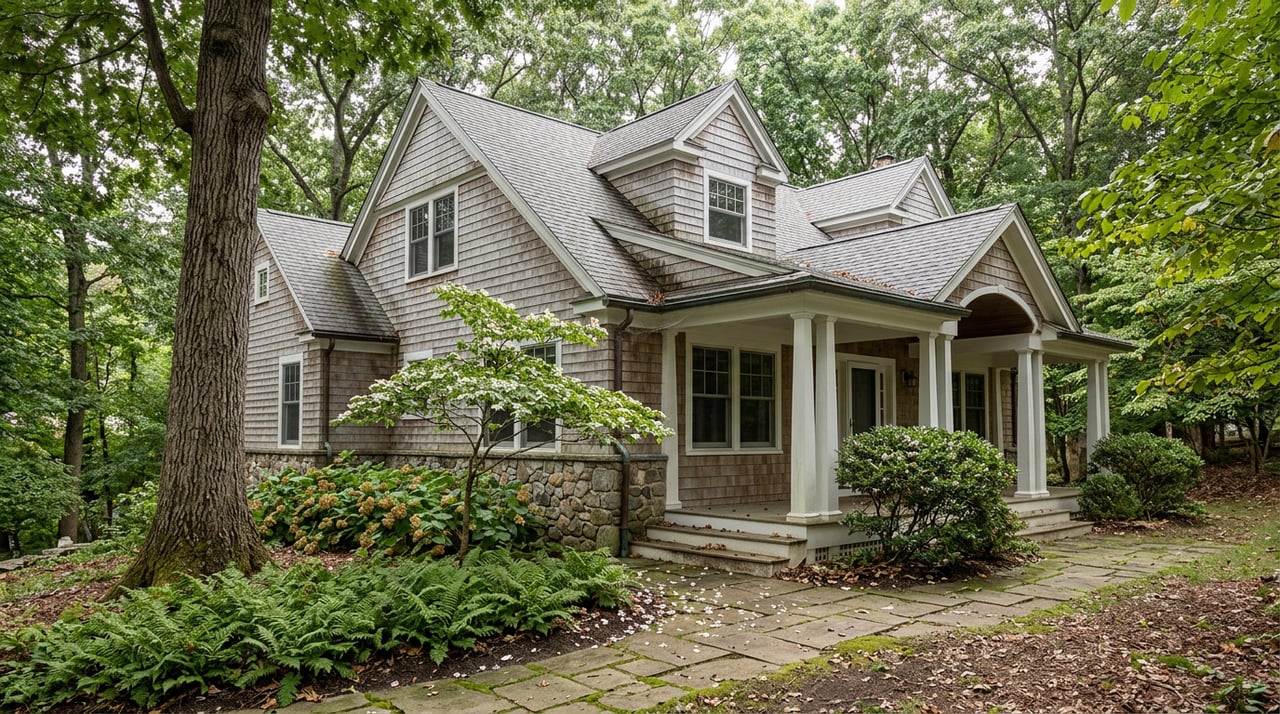
Somewhere on Wardour Drive right now, a listing describes 0.66 acres at the end of a quiet, non-through street with natural screening and privacy from just one adjacent neighbor. The lot has a permitting history: the current owners already started the process of building here. They began the design phase.
That detail matters more in Wardour than almost anywhere else in Annapolis, because it isn't an isolated headache. It's a preview of how nearly every meaningful project in this neighborhood actually works.
Buyers comparing Annapolis waterfront neighborhoods may notice a price difference. Wardour sits on Weems Creek with frontage stretching toward the Severn River, the same water system that runs past Eastport and downtown. The lots are larger. The trees are older. The walk to West Annapolis shops is shorter than the walk from most of Eastport to Main Street.
And yet, neighborhood-level pricing covering early 2026 puts West Annapolis and Wardour at a median single-family price of roughly $790,000, well below Eastport's median of about $1,102,500 and downtown Annapolis's median near $1,447,500. Homes here still move quickly, averaging around 27 days on market over the trailing 12 months against a national average closer to 52. Buyers want in.
Beyond those price comparisons, buyers should consider regulatory requirements, which are relevant to that Wardour Drive lot's partially completed permitting file.
Most of Wardour sits inside the Chesapeake Bay Critical Area, the zone where Maryland requires an extra layer of review before a project can move forward. Anne Arundel County administers this locally, but the requirements stack on top of state oversight from the Critical Area Commission, and shoreline work can pull in the Army Corps of Engineers as well, as Whitehall Building notes. Before a building permit is issued, the county's Office of Planning and Zoning has to review the project.
That's the layer an inland lot in, say, Crofton or Gambrills simply doesn't carry. It's also the layer that turns a straightforward teardown into a multi-agency project timeline, and why so many Wardour listings mention permits, plans, or engineering approvals already in progress, because sellers have learned that a lot with a running head start is worth more than one that starts cold.
It's worth being precise about what triggers this. It isn't just new construction. Anne Arundel County's own guidance fields a version of the same misunderstanding every week: property owners assume small waterfront trees or minor grading are exempt, and they aren't. Any disturbance in the buffer, whether it's cutting vegetation or moving soil, can require its own management plan and county approval before work starts. For a buyer evaluating a Wardour property with plans to add a level, extend a footprint, or clear a view corridor to the water, that review isn't a footnote. It's the first phone call to make, not the last.
The reason buyers accept this complexity is that Wardour has a track record of paying it off. A What's Up? Magazine feature describes a Georgian-style home on a 1.5-acre waterfront lot with Severn River views, built in 1916 and bought by owners who wanted to expand it without losing what made it Wardour in the first place. Working with Annapolis architect Cathy Purple Cherry, they took the original roughly 2,000-square-foot structure and rebuilt around it, ultimately reaching close to 12,000 square feet while keeping the original eight-foot ceiling heights and fireplaces intact and rebuilding the stairs to match.
That's not a renovation. That's a six-fold expansion that still reads as the same house from the water, and it's the clearest illustration of why buyers keep choosing Wardour despite the permitting friction. The upside isn't hypothetical. It's a documented outcome on a lot with the exact regulatory profile every other waterfront parcel in the neighborhood shares.
The tradeoff is time and sequencing, not feasibility. Projects like this don't get built by skipping the Critical Area review, they get built by starting it early and designing around it from the first site visit, which is a very different posture than assuming a downtown lot's timeline will translate directly to Wardour.
None of this happens in isolation from daily life, and that's part of what keeps Wardour's price from drifting even lower. Wardour residents are a short walk from Annapolis Street's small business strip, where Bean Rush Cafe anchors the morning routine and Graul's Market, family-owned since 1920, still handles the weekly grocery run. Rutabaga Juicery & Eats and Always Ice Cream Company round out the walkable options that let residents skip the drive into downtown for basics. The West Annapolis Business Association runs a Spring Festival each May and an Oktoberfest on Annapolis Street each fall, community fixtures that give the neighborhood its own calendar independent of downtown's tourist season.
That's the part of the value proposition that doesn't show up in a permit file. Buyers are paying for river access and a walkable Main Street at the same time, which is part of why demand holds even as due diligence gets more complicated than it looks on the surface.
For a buyer weighing Wardour against Eastport or downtown on price alone, the comparison is incomplete without the permitting picture. A few things worth building into that comparison directly:
None of this means Wardour is a harder place to buy than it's worth. It means the price gap between Wardour and Eastport is doing real work, pricing in a regulatory pathway that a downtown buyer never has to think about, and that gap closes fast for anyone willing to do the permitting homework early.
Does the Critical Area apply to every lot in Wardour? Not uniformly. The designation depends on distance from tidal water and how a specific parcel was classified under the county's program, so two lots on the same street can carry different requirements. Anne Arundel County's Critical Area page is the starting point for checking a specific address.
Does this only affect teardowns, or does it apply to renovations too? It applies more broadly than most buyers expect, which is why early conversations with the county's Office of Planning and Zoning matter regardless of project size.
Does being in the Critical Area affect a home's resale value? Not in a way that shows up as a discount on its own. What it affects is the pool of buyers comfortable with the permitting sequence, which is part of why properties with active approvals or completed engineering work tend to command more buyer confidence than raw, unentitled lots.
If you're comparing Wardour to other Annapolis waterfront neighborhoods and want a clear read on what a specific property's permitting status actually means for your timeline and budget, VSells & Associates can walk through it with you property by property. Get Your Free Home Valuation and let's talk about what the numbers on a Wardour listing are really telling you.
This article is general information, not legal, tax or financial advice. Consult a qualified professional about your situation.




Whether you are buying or selling, we at VSells & Associates make it our mission to guide our clients through the whole process. We make moving simple, straightforward, and as stress-free as possible.