Thinking about buying in Maple Lawn and wondering what the HOA fee really covers? You are not alone. With multiple neighborhoods and housing types, it is easy to assume every home includes the same perks. In reality, benefits and costs vary by association. This guide breaks down how Maple Lawn HOAs are structured, which amenities are typically included, how fees work, and what to verify before you write an offer. Let’s dive in.
How Maple Lawn HOAs are structured
Maple Lawn is a master‑planned community with several housing types, from single‑family homes to townhomes and condos. Most owners interact with two layers of governance. First, a master association manages communitywide spaces and services. Second, a sub‑association or condominium association may handle neighborhood‑specific services tied to your property type.
You agree to Covenants, Conditions and Restrictions when you buy. The HOA’s bylaws and rules put those covenants into practice. An architectural review process typically applies to any exterior change. A board elected by owners oversees policy, while a professional management company runs daily operations.
The key point is simple. Not every Maple Lawn home pays the same dues or receives the same services. You may pay a master fee, a sub‑association fee, or both. Always verify which associations apply to the property you are considering.
What amenities are usually included
Exact benefits depend on your specific association documents. That said, master‑planned communities like Maple Lawn commonly include the following features.
Communitywide amenities
- Village Center common spaces such as plazas, sidewalks, landscaping, and gathering areas.
- Walking trails and multi‑use paths that connect neighborhoods.
- Parks, playgrounds, community greens, and maintenance of select ponds or streams.
- Seasonal community events and programming supported by the master association.
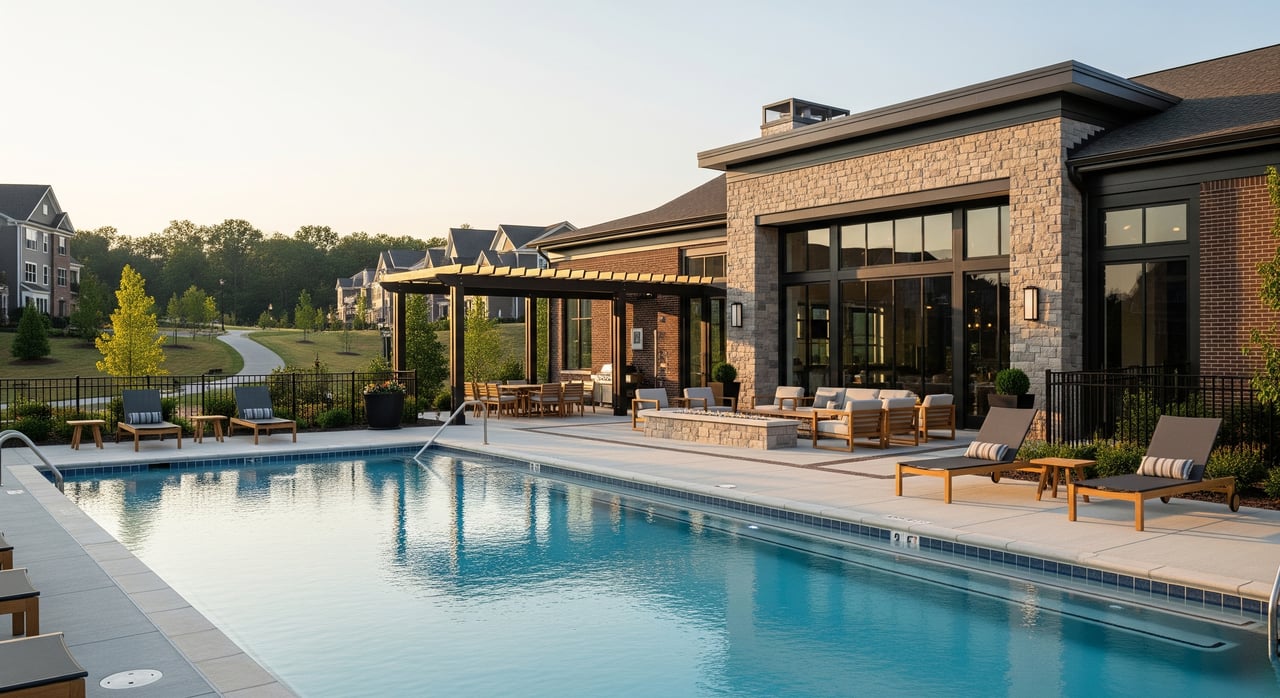
- Recreational facilities such as one or more pools, tennis or pickleball courts, basketball courts, and sometimes a clubhouse or fitness center. Access rules, passes, and guest policies are controlled by the association.
- Streetscape lighting, signage, and maintenance of common areas.
Important note: Restaurants and shops in the Village Center are private businesses, not HOA amenities. Access or discounts there are not typically covered by HOA dues.
Neighborhood services
Services vary by sub‑association or condominium building. You often see:
- Lawn and landscape maintenance for front yards and shared spaces, more common with townhomes or cluster homes.
- Snow removal on private streets, sidewalks, and sometimes driveways in certain neighborhoods.
- Trash and recycling service included for some townhome or condo associations.
- Exterior maintenance and common building insurance for condominiums, and occasionally select townhome clusters.
- Rules and enforcement for parking, pets, and small neighborhood play areas.
Amenity access rules
Access depends on your association and the specific facility. Most amenities prioritize residents and their guests. Some have guest pass limits, reservation systems, or seasonal schedules, especially for pools and clubhouses. Tenant access can be restricted by rules. Always check the current amenity policy and pass requirements in the resale packet.
How HOA fees work in Maple Lawn
Most owners pay dues monthly, but quarterly or annual schedules can occur. In a master‑planned community, you might see a split: a master fee for communitywide amenities plus a sub‑association fee for neighborhood services. Some properties only pay one fee. The recorded covenants and the budget will show who covers what.
What dues usually include
- Care of common areas, landscaping, amenity upkeep, and lighting for shared spaces.
- Trash and snow removal where the association provides those services.
- Insurance for common structures and master policies in condos.
- Management fees, utilities for common facilities, and administrative costs.
- Contributions to the reserve fund for future major repairs.
What dues do not include
- Your property taxes, mortgage payments, and homeowners insurance for your individual dwelling.
- Your home’s interior utilities and maintenance, unless your condo documents state otherwise.
- Upgrades or alterations specific to your lot or unit.
Special assessments and reserves
Associations collect reserves to fund big projects. If reserves are short or an unexpected expense hits, boards can levy special assessments as allowed by the CC&Rs. Ask for the latest reserve study, review the budget, and check recent board minutes. The Community Associations Institute offers helpful guidance on governance, budgeting, and reserve planning so you know what to look for.
Budgeting your real monthly cost
To compare a Maple Lawn home to a non‑HOA option nearby, look at your effective monthly cost. Add every recurring expense, then subtract any services the HOA covers for you.
- For a Maple Lawn home: mortgage principal and interest + escrowed property taxes + homeowners insurance + HOA dues + utilities not included in dues. If your sub‑association covers lawn care, trash, snow removal, or exterior maintenance, those private costs can be reduced or eliminated.
- For a non‑HOA home: mortgage + property taxes + homeowners insurance + private lawn care + snow removal + pool membership or gym membership + trash service if not provided by the municipality.
If you are financing, keep in mind lenders count HOA dues in your debt‑to‑income ratio. Higher dues may affect your maximum loan amount. A quick conversation with your lender can clarify how dues change your qualification and monthly comfort zone.
Resale impact and buyer appeal
Amenities and consistent upkeep can help protect value and broaden buyer appeal. Pools, trails, and a well‑kept streetscape are strong lifestyle draws. Architectural standards can prevent eyesores and maintain curb appeal across the neighborhood.
There are tradeoffs. Monthly dues reduce your cash flow. Rules on exterior changes or rentals can limit flexibility. If an association faces underfunded reserves or litigation, that can weigh on buyer confidence. The takeaway is balance. Amenities can support demand and resale potential, but governance quality and fee levels matter.
Due diligence: what to verify before you buy
Before you write an offer, request the full set of association documents for the master and any sub‑association. Review them carefully or ask your agent, attorney, or lender for help interpreting key sections.
Must‑have documents
- Declaration or CC&Rs for the master association and your sub‑association.
- Bylaws and rules, including architectural guidelines and parking rules.
- Current budget, recent financial statements, and the latest reserve study.
- Board minutes for the last 12 months to spot upcoming projects or assessments.
- Certificate of insurance listing coverage limits and deductibles.
- Schedule of current dues, frequency, and any pending special assessments.
- Information on delinquency rates if available.
- Management contract details.
- Litigation disclosures, if any.
- Rental restrictions and owner occupancy rules.
- Amenity access rules, guest policies, and pass requirements.
- Resale packet, transfer fees, and any move‑in or move‑out fees.
Who to contact
- Master association management for communitywide policies and amenity rules.
- Sub‑association or condo management for neighborhood services and fee details.
- Title company or attorney to confirm recorded covenants and easements.
- Your lender to understand how dues affect qualification and whether a condo has required approvals.
Maple Lawn vs. non‑HOA: which fits your lifestyle
- You may prefer Maple Lawn if you value community amenities like pools and trails, want predictable maintenance of common areas, and appreciate rules that keep exteriors consistent. Downsizers often like reduced yard work, while many households enjoy walkable paths and programmed events.
- You may prefer a non‑HOA home if you want maximum freedom to modify your exterior, park certain vehicles, or avoid monthly dues. Just budget for private services like lawn care, snow removal, and recreation.
Neither choice is universally better. Focus on your day‑to‑day lifestyle, cost comfort, and how much you value shared amenities compared to personal control.
Smart questions to ask
Use these questions to confirm what you are getting for your dues and to avoid surprises later.
- What exact services do my dues cover, and what is excluded for my specific address?
- Do I pay both a master fee and a sub‑association fee? If yes, how are they split and billed?
- What are the current rules for amenity access, guest passes, and reservations?
- Are there rental caps or owner occupancy requirements that affect my plans?
- How well funded are the reserves, and when was the last reserve study completed?
- Are there any planned capital projects or special assessments under discussion?
- What are the transfer, resale packet, and move‑in or move‑out fees at closing?
How our team helps you compare
When you are deciding between Maple Lawn and a non‑HOA alternative, clear numbers and documents make all the difference. We help you request and read the resale packet, build an effective monthly cost comparison, and coordinate with your lender so you know exactly how dues affect your approval and payment. If you are selling, we highlight the right amenities and services in our marketing to attract qualified buyers who value what your association provides.
Ready to see how the amenities and fees align with your goals? Connect with Vsells & Associates for local guidance and a clear, side‑by‑side plan.
FAQs
What Maple Lawn HOA fees usually include
- Dues commonly cover common area maintenance, amenity upkeep, management, and reserves, plus neighborhood services like lawn care or trash in some sub‑associations.
How Maple Lawn amenity access typically works
- Access is usually limited to residents and their guests, with rules for passes, guests, and reservations. Policies vary by association, so review the current rules.
Whether utilities are included in Maple Lawn HOA dues
- Utilities for individual homes are usually not included. Some condominiums include portions of water, sewer, or common utilities. Check your building’s budget.
How Maple Lawn HOAs affect loan qualification
- Lenders count HOA dues in your debt‑to‑income ratio, which can reduce your maximum loan amount. Ask your lender to model different dues scenarios.
What to check for Maple Lawn special assessments
- Review the reserve study, recent budgets, and board minutes for signs of underfunded reserves or planned projects that could trigger a special assessment.
Whether Maple Lawn rules limit rentals
- Many associations set rental caps or require lease approvals. Confirm current rental limits and any minimum lease terms before you buy.